I'm interested in the killing of Captain Henry Stanton, who Fort Stanton is named after. He was killed in 1855, near Mayhill, according to this account:
Shuster, J. (2012, Dec. 31). A Cold New Mexican January in 1855. Jack Shuster's Western History blog. Online. jackshuster.blogspot.com/2012/12/a-cold-new-mexican-january-in-1855.html. Accessed 1-2020.
This account puts his killing in a deep ravine near the modern town of Mayhill, but on the Rio Penasco, which runs through Mayhill
I'm dying to know more, so to speak, also about the German prisoner of war camps in Mayhill at the time. There's stuff out there to be learned. In this situation, the Mescaleros appear to have won the battle, but lost the war. They were unprepared to really go up against the American army, though they knew this area, and knew where to ambush Stanton and his men, and got the best of them in this particular encounter. Overall, historians point out, it was bad for the Mescaleros; they couldn't sustain victories against the army at that time.
I'll post more as I get it.
Saturday, January 25, 2020

Thursday, January 2, 2020
The snow has become more serious, and is causing problems
on the road. At first it was only flurries, not sticking, not even all
that cold. Now it is cold and there is a lot of it. It freezes everywhere
someone isn’t driving, and freezes quickly.
The plows in cases like this sometimes make it worse. They
take a couple of inches of loose snow and turn it into a single inch of
well-packed snow. But it’s the well-packed snow that makes ice, that makes a
normal car go careening off a mountainside.
They’re very careful to close the roads if there is too much
of that kind of danger. But often you don’t see the danger until it’s too late.
The general wisdom is, drive slowly, consistently, don’t use the brake, just
get where you’re going, keep going forward. I sat here in my chair, wondering
about my wife; she was out there in it, and I could picture every inch of that
windy mountain road that she might be stuck on.
The first part of it rises straight out of Alamogordo and
goes sixteen miles, straight up, to Cloudcroft. While Alamogordo is at about
3300 feet, Cloudcroft is at 8700, at least where the road levels out and goes
straight through the town. 5400 feet in about thirteen miles makes it one of
the steeper roads in the country, but the scary part is the steep dropoffs at
the side of the road where, if you miss, or slow down, or get to sliding back
down the hill, you could so easily go right off the edge. It’s all National
Forest there. People are used to the windy, icy nature of the road and that
still doesn’t make it easier. There’s a tunnel about halfway up; at that point,
the drop-off is so steep that there would be no recovery. There are tiny
guardrails, though. Trucks are known to hurtle to their death, but my wife, in
her Subaru, would probably be ok.
The next part would be from Cloudcroft to our house. I am
not so confident about that part either. I was in Cloudcroft earlier today,
with three teenagers, when the flurries started. We got supplies and started on
our way. The road winds down through the mountains, from 8700 to about 7300,
when then it turns left to climb a ridge. That ridge takes it back up to about
8200 or more, and has its own snow systems. So, there are times when that ridge
is much slicker and more dangerous than anything else in the area. And, it has
less traffic. More likelihood of getting stuck, or being in some kind of
trouble, up there.
The locals are used to it, and careful to stay off the ridge
in weather like this. Most of them have 4-wheel-drive, and aren’t especially
concerned. I’m mostly concerned, because of my wife’s general fear of the
conditions.
Tonight she is taking the back road, since the main hill
highway is closed. The back road winds around treacherously, and actually
crosses a river twice. But this isn’t rain, so that river is not going to have
much more than a trickle in it. Nevertheless, the winding curves of that road
might be trouble, especially if anything gets frozen. I’m almost more worried
about her on that back road, than on the main highway, where at least, when you
get stranded, somebody will come by to help you out.
I have a feeling it could be a long night.
Saturday, December 28, 2019
small town excitement
We left Las Cruces at about ten knowing that a storm was coming into Cloudcroft, and that we'd have to make it over the hill, the two hours or so back to our home in Sixteen Springs. It took us about half an hour to get through Alsamo, needing a few things and getting delayed a little. As we got into Cloudcroft, around noon, it was already snowing though the roads weren't dangerous yet really.
But a wild thing was happening: we read about a bomb threat on the community (facebook) site, and through personal communication picked up rumors of actual detonation. We could hardly imagine. But when we got up to Cloudcroft, and the intersection of 130 there at the old ski motel, we could see that the police had blocked off the whole western side of Burro.
We'd be the first to say that these were rumors - that attached the bomb threat to the Western, that they had only closed that half of Burro, and god forbid, something had detonated. There was a media lockdown: people were asked not even to ask about it on the community site, and the village promised to tell the public whatever they knew as soon as possible. Now in a small town like this everyone is going to be asking, as most of us are just sitting around in the vacation week between the holidays. But these "asking" posts were being deleted. Someone pointed out, this afternoon (it is now almost 4 30) that the highway was closed, but this appears to be because of the weather. In other words, there's a convergence of actual news and weather news.
Now having the highway closed due to fast-falling snow is not especially unusual, as it happens sometimes several times in a single year. The plows and salt-trucks run as fast as they can, and still can't keep up with it, and cliffs are steep on both sides of the road, and in general it's better to be safe when cars are literally sliding all over the place.
But a bomb threat, that's another story. If it was associated with the Western, we immediately picture a disgruntled customer making a surly comment. But actually detonating it? That kind of moves it to another level. Maybe he was actually spurned by a waitress, or had food that not only didn't taste good, but also made him sick. And hey, I'm assuming he's a man, but maybe not. Maybe he/she was the waitress herself.
So speculation is rampant, needless to say. After all, there are only about a thousand of us, so the first question is, who would do such a thing? But then, most of us know at least half a dozen who could fit the bill. And then, as to the high level of secrecy, and the actual suppression of inquiries about it, one can only say, must be something big, or they wouldn't bother.
Some people compare it to Sunspot. As in, they had a secret operation up there to bring in a helicopter and arrest some guy who was messing with a computer. Truth is, what's rampant is distrust of secret operations that they don't tell anyone about until they are all over. But, if you think of it, there are a lot of good reasons they might not want everyone to know what they're up to, until they're done.
I have a volunteer fire radio that I could turn on, if I were really curious about all the details. I've been leaving it off, not only because it's not fire season, but also, because I've become too busy shuttling people around, in bad weather, on bad roads, in bad cars. When I got home from Cruces, I just wanted to relax, and I sat back and watched the snow for a while, and didn't even turn the radio on. Sure, I could know more than I do. But I'm not really that curious. Something like this bomb deal, I'll find out more than I need to know, soon enough. What else is there to do? "In a small town, there isn't much to see, but what you hear makes up for it." My reading of that is, because there are so few of us, everyone will have a unique spin on it, and know about it from some angle that makes a good story. I just saw it from the edge, going through town. We made it up 82 before the road closed; we saw them blocking off the center of town; we made it home before the snow started. That's already more excitement than I really need for a day.
But a wild thing was happening: we read about a bomb threat on the community (facebook) site, and through personal communication picked up rumors of actual detonation. We could hardly imagine. But when we got up to Cloudcroft, and the intersection of 130 there at the old ski motel, we could see that the police had blocked off the whole western side of Burro.
We'd be the first to say that these were rumors - that attached the bomb threat to the Western, that they had only closed that half of Burro, and god forbid, something had detonated. There was a media lockdown: people were asked not even to ask about it on the community site, and the village promised to tell the public whatever they knew as soon as possible. Now in a small town like this everyone is going to be asking, as most of us are just sitting around in the vacation week between the holidays. But these "asking" posts were being deleted. Someone pointed out, this afternoon (it is now almost 4 30) that the highway was closed, but this appears to be because of the weather. In other words, there's a convergence of actual news and weather news.
Now having the highway closed due to fast-falling snow is not especially unusual, as it happens sometimes several times in a single year. The plows and salt-trucks run as fast as they can, and still can't keep up with it, and cliffs are steep on both sides of the road, and in general it's better to be safe when cars are literally sliding all over the place.
But a bomb threat, that's another story. If it was associated with the Western, we immediately picture a disgruntled customer making a surly comment. But actually detonating it? That kind of moves it to another level. Maybe he was actually spurned by a waitress, or had food that not only didn't taste good, but also made him sick. And hey, I'm assuming he's a man, but maybe not. Maybe he/she was the waitress herself.
So speculation is rampant, needless to say. After all, there are only about a thousand of us, so the first question is, who would do such a thing? But then, most of us know at least half a dozen who could fit the bill. And then, as to the high level of secrecy, and the actual suppression of inquiries about it, one can only say, must be something big, or they wouldn't bother.
Some people compare it to Sunspot. As in, they had a secret operation up there to bring in a helicopter and arrest some guy who was messing with a computer. Truth is, what's rampant is distrust of secret operations that they don't tell anyone about until they are all over. But, if you think of it, there are a lot of good reasons they might not want everyone to know what they're up to, until they're done.
I have a volunteer fire radio that I could turn on, if I were really curious about all the details. I've been leaving it off, not only because it's not fire season, but also, because I've become too busy shuttling people around, in bad weather, on bad roads, in bad cars. When I got home from Cruces, I just wanted to relax, and I sat back and watched the snow for a while, and didn't even turn the radio on. Sure, I could know more than I do. But I'm not really that curious. Something like this bomb deal, I'll find out more than I need to know, soon enough. What else is there to do? "In a small town, there isn't much to see, but what you hear makes up for it." My reading of that is, because there are so few of us, everyone will have a unique spin on it, and know about it from some angle that makes a good story. I just saw it from the edge, going through town. We made it up 82 before the road closed; we saw them blocking off the center of town; we made it home before the snow started. That's already more excitement than I really need for a day.
Sunday, November 17, 2019


burn
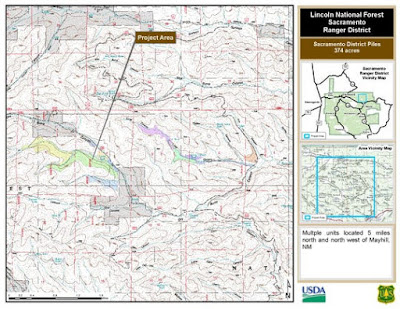
National Forest Service announces a prescribed burn in Walker Canyon and Burnt Canyon, but doesn't tell exactly where. We go up Walker Canyon a lot though not generally where the National Forest is, but would like to know anyway. Here is the somewhat unclear map that appeared online at the Alamo news site. Any more information I could get, would be helpful; I'll keep you posted.

Friday, October 4, 2019
issues
My guess is that the two biggest issues people are talking about at the moment are, 1) firewood permits, come back to the mountain, and, 2) football season aborted due to lack of players. I actually don't have much to say about either issue, but there's a third: 3) constant rain through the month of October. What's up with that?
I got to meet my neighbors the other day. FedEx claimed they had delivered a package, but we didn't see it, so we went around asking neighbors who lived on similar roads, with similar addresses. Turned out, it was just FedEx's mistake; the package came at about 11:30 at night. It is kind of how they work. They don't always know what's been delivered, or where, or how it happened, and sometimes they give out wrong information. But if they have to, they'll be out on these roads up until midnight or later.
Back to football. I say, give the kids a break. If you don't have eleven, you don't. Maybe we should go back to six, or give it up altogether. We have a little problem with concussions anyway, and we don't want these kids coming back as adults and saying, my brain turned to mush. You can call me a "snowflake," but I say, don't crush their heads yet. Let a little of this story play out, and the rest of us will have to just watch the pros or college on television.
I got to meet my neighbors the other day. FedEx claimed they had delivered a package, but we didn't see it, so we went around asking neighbors who lived on similar roads, with similar addresses. Turned out, it was just FedEx's mistake; the package came at about 11:30 at night. It is kind of how they work. They don't always know what's been delivered, or where, or how it happened, and sometimes they give out wrong information. But if they have to, they'll be out on these roads up until midnight or later.
Back to football. I say, give the kids a break. If you don't have eleven, you don't. Maybe we should go back to six, or give it up altogether. We have a little problem with concussions anyway, and we don't want these kids coming back as adults and saying, my brain turned to mush. You can call me a "snowflake," but I say, don't crush their heads yet. Let a little of this story play out, and the rest of us will have to just watch the pros or college on television.
Friday, August 23, 2019
feral cats
I love the lady at Allsup's. She's done the right thing, to take in those feral cats, defend them from all comers, make sure they're spayed if possible, and talk to people about standing up for them and saving them. The argument for having spayed feral cats around is simple: they'll keep unspayed feral cats from hanging around, because they're territorial, and that will be good for everyone.
I admit that I don't know the whole story. It could very well be that they get the birds that are feeding in the hummingbird feeders, or they harass somebody else's pets. I'm sure they're not perfect, because, though she feeds them pretty regularly, cats are cats, and they're out there. So yes, they'll haul down a few birds, and maybe a few mice and voles, which in general I'd say, is good for downtown. But downtown has skunks too, and various other things, and I really have no idea who comes out at night.
She would work the night shift at Allsup's, and keep track of which ones crossed the highway, or got hit on the highway, or came back regularly for more. She knew them by name, the dozen or so that she considered the village cats. Some were injured, probably, or imperfect. Most had been abandoned at some point by somebody.
But what happened was, apparently, somebody came around and dropped off a number more. Maybe this happened one at a time, or maybe somebody had five or six they didn't know what to do with. Maybe they thought this was about the best they could do for their cats, since they were moving where they couldn't take them, and they had to do something. Turning them over to animal control is basically allowing for their deaths, so nobody really wants to do that. But alas, now that seems like it will be the fate of all these cats. Animal control is coming. There are too many of them. Somebody has complained, and the tides turned against her. There were simply too many, and they were all over the place.
I once was in a position where I had to get rid of four kitties in one day. I was desperate as I was moving to a place that didn't allow them. I'd already paid $50 to get one or two of them back from animal control; I don't remember the amount, or the details, but I do for some reason remember that it was $50 I couldn't afford. And one of them had fallen from a high shelf and scratched the living bejeesus out of my cello, which was just sitting there uncovered. But that was my fault. These were innocent kittens. I think my two had been doubled by a friend who dropped off two of hers, under the same condition: she was moving.
We were irresponsible cat owners, what can I say? I saw the clock ticking and I had no options for these four kitties.
FInally I took them down to the bar; it was this time of year, late August, and the bar had an outdoor patio where people were passionately getting drunk and socializing.
Well, I had no trouble getting rid of them there; I got rid of four in about twenty minutes. Got rid of the first three in about three minutes. The fourth, I had some trouble with, but someone came by and took him. They were cute; they were kittens. But these were drunks. For months, every time I came to that bar, I'd hear stories about the kittens. Most had come to bad end, or at least gone from owner to owner. Very few of the people who took them were actually able to keep them for any length of time.
Still, I was proud of myself, because I hadn't given them up and let animal control have them. That was a sure death for them, and I avoided it.
So many things are like that these days. There are way too many kitties in this world, not enough no-kill shelters. I admire Kinky Friedman, the Texan who turned over his dad's ranch to be a no-kill shelter (first in Texas? Only one in Texas?) - for one thing, because it saved his musical career, and allowed him, a second-rate musician, to remain a star and play publicly for years, as a benefit. Back on the ranch, I think he mainly ensured that they lived, that they had a decent Texas-country life, spayed but loved, and let their numbers skyrocked as demand ensured. But you know, demand is huge. Cats are legion. Our twenty are not the only ones out there. They are just the ones that are struggling to make it at 9000 feet.
The village needs to do something here, and just killing them, I think, is not an appropriate response. I can't argue with the people who say, maybe two dozen is too much. I have no idea if this over-supply would simply take care of itself over a few years (as the mountain lions, and presumably the fox, and others, would come to learn about the easy pickings). I can sympathize with the people who simply can't wait that long, who want their town back, who perhaps want to be able to feed birds or have them around again. I don't know the answer to this problem.
I sense, though, that somebody needs to take a truck load of them to a no-kill shelter, and drop them off somewhere where they have a chance. Maybe that should be me.
I admit that I don't know the whole story. It could very well be that they get the birds that are feeding in the hummingbird feeders, or they harass somebody else's pets. I'm sure they're not perfect, because, though she feeds them pretty regularly, cats are cats, and they're out there. So yes, they'll haul down a few birds, and maybe a few mice and voles, which in general I'd say, is good for downtown. But downtown has skunks too, and various other things, and I really have no idea who comes out at night.
She would work the night shift at Allsup's, and keep track of which ones crossed the highway, or got hit on the highway, or came back regularly for more. She knew them by name, the dozen or so that she considered the village cats. Some were injured, probably, or imperfect. Most had been abandoned at some point by somebody.
But what happened was, apparently, somebody came around and dropped off a number more. Maybe this happened one at a time, or maybe somebody had five or six they didn't know what to do with. Maybe they thought this was about the best they could do for their cats, since they were moving where they couldn't take them, and they had to do something. Turning them over to animal control is basically allowing for their deaths, so nobody really wants to do that. But alas, now that seems like it will be the fate of all these cats. Animal control is coming. There are too many of them. Somebody has complained, and the tides turned against her. There were simply too many, and they were all over the place.
I once was in a position where I had to get rid of four kitties in one day. I was desperate as I was moving to a place that didn't allow them. I'd already paid $50 to get one or two of them back from animal control; I don't remember the amount, or the details, but I do for some reason remember that it was $50 I couldn't afford. And one of them had fallen from a high shelf and scratched the living bejeesus out of my cello, which was just sitting there uncovered. But that was my fault. These were innocent kittens. I think my two had been doubled by a friend who dropped off two of hers, under the same condition: she was moving.
We were irresponsible cat owners, what can I say? I saw the clock ticking and I had no options for these four kitties.
FInally I took them down to the bar; it was this time of year, late August, and the bar had an outdoor patio where people were passionately getting drunk and socializing.
Well, I had no trouble getting rid of them there; I got rid of four in about twenty minutes. Got rid of the first three in about three minutes. The fourth, I had some trouble with, but someone came by and took him. They were cute; they were kittens. But these were drunks. For months, every time I came to that bar, I'd hear stories about the kittens. Most had come to bad end, or at least gone from owner to owner. Very few of the people who took them were actually able to keep them for any length of time.
Still, I was proud of myself, because I hadn't given them up and let animal control have them. That was a sure death for them, and I avoided it.
So many things are like that these days. There are way too many kitties in this world, not enough no-kill shelters. I admire Kinky Friedman, the Texan who turned over his dad's ranch to be a no-kill shelter (first in Texas? Only one in Texas?) - for one thing, because it saved his musical career, and allowed him, a second-rate musician, to remain a star and play publicly for years, as a benefit. Back on the ranch, I think he mainly ensured that they lived, that they had a decent Texas-country life, spayed but loved, and let their numbers skyrocked as demand ensured. But you know, demand is huge. Cats are legion. Our twenty are not the only ones out there. They are just the ones that are struggling to make it at 9000 feet.
The village needs to do something here, and just killing them, I think, is not an appropriate response. I can't argue with the people who say, maybe two dozen is too much. I have no idea if this over-supply would simply take care of itself over a few years (as the mountain lions, and presumably the fox, and others, would come to learn about the easy pickings). I can sympathize with the people who simply can't wait that long, who want their town back, who perhaps want to be able to feed birds or have them around again. I don't know the answer to this problem.
I sense, though, that somebody needs to take a truck load of them to a no-kill shelter, and drop them off somewhere where they have a chance. Maybe that should be me.
Subscribe to:
Posts (Atom)